

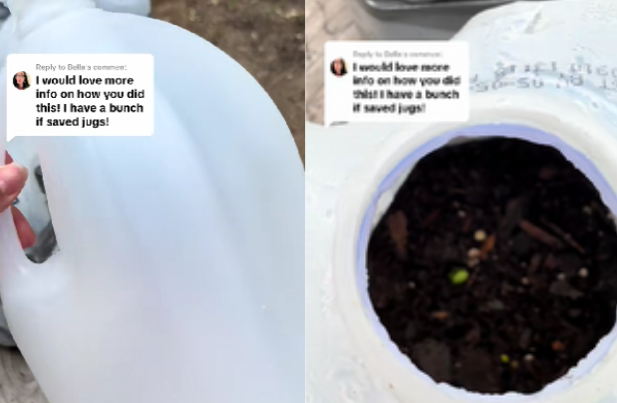
When the winter chill sets in and your garden beds look lifeless, it’s tempting to pack away your gloves and wait for warmer days.
But what if you could start your spring garden right now—without fancy grow lights, heat mats, or even indoor space?
There’s a clever trick gardeners swear by, and all you need are a few milk jugs and some seeds.
It’s called winter sowing—a 20-year-old discovery that’s quietly transforming how people grow plants through the coldest months of the year.
Two decades ago, an experienced gardener named Trudi Davidoff decided to rethink how she started her seeds.
Living in a small cottage meant she had little room for trays or lights, and many of her seeds needed cold stratification before they could sprout.
So, she reached for what she had on hand—empty plastic containers—and gave her experiment a go.
That experiment bloomed into success.
By spring, her makeshift containers were teeming with healthy seedlings.
It was such a breakthrough that Trudi later worked with the USDA to define the practice officially.
Her method was simple yet brilliant—transforming milk jugs into mini-greenhouses that let seeds experience natural freeze-thaw cycles while staying protected from the elements and wildlife.
This low-effort gardening technique is ideal for anyone who wants results without the physical strain.
You don’t need to haul heavy trays indoors, deal with bright lights, or go through the tedious process of hardening off seedlings.
'Set it and forget it' and allow Nature to run its course—experienced winter sower advice
Seasoned gardeners swear by its ease—once you’ve prepped your jugs, nature does the rest.
Rain, frost, even snow are part of the process, so there’s no need to keep covering or fussing over the containers.
It’s gentle on the joints too—just a little cutting, filling, and taping, and then you can sit back while Mother Nature handles germination.
Plus, since the seedlings are raised outdoors, they grow stronger and hardier, ready to face real garden conditions without any extra hardening off.
If you’ve noticed the cost of plants creeping up, winter sowing is a game-changer for your wallet.
There’s no need for pricey setups—no trays, no lights, no heat mats.
Just reuse milk jugs, juice bottles, or takeaway containers, add potting soil and seeds, and you’re good to go.
With small perennials now selling for around $5–6 each, this frugal technique can save you hundreds over a single season.
It’s the ultimate ‘do more with less’ method—perfect for thrifty green thumbs.
Here’s how to turn your recyclables into thriving mini-greenhouses:
Preparation phase: Clean your containers with soap, water, and a drop of bleach. Then poke four drainage holes into the bottom using a heated screwdriver or scissors.
Creating your mini-greenhouse: Cut horizontally around the jug just below the handle, leaving a small hinge so you can open and close it easily.
Planting time: Add 3–4 inches of moist potting mix—wet enough to hold its shape but not drip. Plant seeds as directed on their packets, then mist the top layer with water.
Sealing and labelling: Close the jug, tape around the middle, and label the variety and sowing date with a garden marker.
Winter sowing success checklist
- Choose hardy plants that can tolerate cold
- Use clean containers with drainage holes
- Keep soil moist but not waterlogged
- Label everything clearly with variety and date
- Place in sunny, sheltered location
- Check monthly and add water if needed
Because our seasons are opposite to those in the Northern Hemisphere, timing is key.
Most seeds need about eight weeks of cold before they’re ready to sprout, so aim to start your winter sowing between late June and August.
Seeds won’t germinate immediately, but that’s the point—they’ll rest through the cold before spring warmth coaxes them to life.
When choosing seeds, focus on those that naturally handle cool conditions.
Avoid heat-loving crops like tomatoes and peppers—they’ll sulk rather than sprout.
Best plants for Australian winter sowing
Vegetables: Lettuce, kale, broccoli, cabbage, onions, leeks, Asian greens
Herbs: Parsley, chives, thyme, sage, oregano, coriander
Native Flowers: Many Australian natives benefit from cold stratification
Cool-season annuals: Poppies, sweet peas, calendula, pansies
Hardy perennials: Echinacea, native daisies, lavender
Look for labels mentioning ‘cold-tolerant’, ‘hardy’, or ‘requires cold stratification’—they’re your best candidates.
Once your jugs are ready, place them somewhere sunny but protected from strong winds—against a wall or fence works perfectly.
Check your containers about once a month.
If the soil looks dry, spray water through the spout.
The goal is damp, not soggy soil.
When the first warm days arrive, your jugs will be bursting with hardy seedlings—ready to transplant straight into the garden without any special treatment.
You can adapt this technique with almost any clear plastic container—spinach tubs, juice bottles, strawberry clamshells, or even rotisserie chicken boxes all work beautifully.
The magic of winter sowing lies in how simple it is—no gadgets, no stress, just patience and trust in nature’s rhythm.
Once gardeners tried this method, many discovered that their flowers and vegetables grew stronger, brighter, and far more resilient than those started indoors.
This winter, don’t just wait for spring—create it.
What This Means For You
Winter sowing is a simple, cost-effective way to grow your garden using recycled containers during the colder months.
It’s a great option for those who prefer a low-effort, rewarding hobby that doesn’t require expensive gear or constant care.
In Australia, the best time to start is between late June and August—right when the chill sets in.
By choosing cold-hardy or native plants, you’ll set yourself up for a vibrant, thriving garden once spring arrives.
It’s proof that with a little creativity and patience, you can keep your love of gardening alive all year round.
If you love the idea of making the most out of your garden year-round, there’s even more inspiration waiting for you beyond winter sowing.
Discover how simple gardening habits can do more than just fill your yard with blooms—they can actually boost your wellbeing and happiness too.
It’s the perfect follow-up for anyone looking to turn their time in the garden into a source of joy and longevity.
Read more: Experts Reveal the Top 7 Gardening Secrets for Boosting Your Lifespan and Happiness!
Winter Sowing in Milk Jugs: A Step-By-Step Guide — Explains how Trudi Davidoff pioneered winter sowing about 20 years ago, later collaborating with the USDA to define the technique officially.
https://rethinkrural.raydientrural.com/blog/winter-sowing-in-milk-jugs-a-step-by-step-guide
Milk Jug Winter Sowing Tutorial—How, When & What to Plant—An Oregon Cottage — Covers the benefits of outdoor seed starting and why it eliminates the need for indoor trays or hardening off seedlings.
https://anoregoncottage.com/milk-jug-winter-sowing/
Seed Starting 101: A Guide to Winter Sowing in Milk Jugs — Highlights how winter sowing is a frugal way to start seeds without heat mats or grow lights, using common household containers.
https://thereidhomestead.com/seed-starting-101-winter-sowing/
Winter Sowing in Milk Jugs Greenhouse | Almanac.com — Outlines practical steps for preparing containers, adding drainage holes, and maintaining soil moisture for best germination results.
https://www.almanac.com/winter-sowing-milk-jugs-5-easy-steps
Winter Sowing for Beginners: How to Plant and Grow Seeds in a Milk Jug Greenhouse — Describes how to care for seedlings through winter and transplant them directly into the garden without hardening off.
https://zerowastehomestead.com/wint...lant-and-grow-seeds-in-a-milk-jug-greenhouse/
Have you tried winter sowing before, or are you planning to give it a go this year? We’d love to hear which plants you’re most excited to start with.
Seniors Discount Club
Latest Articles
-
 When a children's playground becomes a 'crash' course in irony: The memorial that's got Aussies talking
- Started by Danielle F.
- Replies: 0
-
When a sprinkle costs extra: How a simple café charge sparked a national debate over tradition and value
- Started by Veronica E.
- Replies: 0
-
It's time for a seasonal refresh: The complete guide to keeping homes clean all-year-round

- Started by Danielle F.
- Replies: 0
-
 When you click on an ad in sales season, retailers get to harvest your data
- Started by The Conversation
- Replies: 0